 |
|
DOE Film Archive
|
Trinity
|
 Date: 1945 | Film ID: 4 | Runtime: 11:34
Project Trinity, conducted by the Manhattan Engineer District, was designed to test and assess the effects of a nuclear weapon. The 'Gadget' was detonated on a 30 meter tower at the Alamogordo Bombing Range in south-central New Mexico. The film details the assembly and hoisting of the device into the tower, and the detonation itself. This film has been digitally filtered to remove noise and improve picture quality by Sonicbomb. This film is silent.
|
|
Project Crossroads
|
 Date: 1948 | Film ID: 0800002 | Runtime: 42:32
Crossroads was an atmospheric nuclear weapon test series conducted in the summer of 1946. The series consisted of two detonations, each with a yield of 23Kt. Able - detonated at an altitude of 158 meters. Baker detonated 27 meters underwater. It was the first nuclear test held in the Marshall Islands. The film consists of a non-technical report of the activities of Joint Task Force One. It was produced by the Navy Photographic Science Laboratory. Preparations, the target array, both detonations and the aftermath are shown. This film is black and white. Though the title shows 'Test Able', the film's second half shows Baker test.
|
|
Operation Sandstone
|
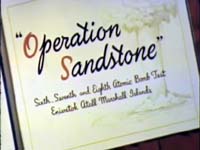 Date: 1948 | Film ID: 0800003 | Runtime: 20:31
In 1948 the U.S. nuclear stockpile consisted of approximately 50 atomic bombs. The ability to produce more plutonium was limited, so researchers wanted to develop more efficient implosion bombs. Greater efficiency means the same yield while using less expensive fissionable material, or a greater yield from the same amount. The goal was to prove these more efficient designs. The film details preparation, radiological safety, instrumentation, photography and the aftermath. Shots X-Ray, Yoke and Zebra are shown.
|
|
Operation Greenhouse
|
 Date: 1951 | Film ID: 0800009 | Runtime 22:31
Four tests were detonated on the islands of Enjebi, Eleleron and Runlt on Enewetak Atoll. All were fired on towers and resulted in significant downwind fallout. The George test proved a hydrogen bomb was possible and led to a crash development program. Item was the first test of 'fusion boosting', capable of approximately doubling the yield. This development allowed the use of less fissile material for the same yield. The film details preparation, instrumentation, material effects tests and test animals. Physicist Edward Teller makes an appearance.
|
|
JTF 3 Operation Greenhouse
|
 Date: 1951 | Film ID: 0800088 | Runtime 1:19:25
The 3rd series of tests in the Pacific Proving Grounds, conducted by the AEC in 1951. Notable were - George, a 225 kiloton experimental test which tripled the yield of any test up to that time, and Item which verified the boosting principle. Target buildings, bunkers, test homes and factories were built on Mujinkarikku Islet. The George cloud is shown, and an ice cap which moved down the cloud stem forming a skirt. Setup and preparation of the tests devices is shown in detail. Alvin Cushman Graves and Edward Teller both make appearances. The film is relatively high quality, with some degradation of the audio in portions.
|
|
Buster-Jangle ME
|
 Date: 1951 | Film ID: 0800010 | Runtime: 1:16:34
The 2nd test series conducted at the Nevada Test Site in 1951, consisting of 5 tests under Buster and 2 under the Jangle phase. The objectives were to evaluate new devices, and to obtain data on the phenomena associated with them. The film details the first continental test series Operation Ranger. The five airdropped tests of Ranger were designed to test triggers for weapons to be tested in Operation Greenhouse. The military conducted many effects tests during the operation. Foxholes, textiles, plastics and wood were placed at various intervals to measure the effects of thermal radiation. The film shows cloud sampling, instrumentation, flash blindness experiments and animal testing.
|
|
Target Nevada
|
 Date:: 1951 | Film ID:: 0800096 | Runtime:: 13:55
Produced for the US Airforce, in conjunction with the Lookout Mountain Laboritory in Hollywood. The film content focuses on US Air Force support of the Atomic Energy Corporation on continental atomic tests. The film features footage of several spectacular shots from Operation Buster-Jangle. This film has been beautifully restored by Atom Central.
|
|
Operation Tumbler MP
|
 Date: 1951 | Film ID: 0800011 | Runtime: 48:02
Tumbler-Snapper consisted of eight nuclear tests in two phases. Tumbler phase was airdropped nuclear tests conducted by the DOD. Snapper phase was a set of experiments conducted by the AEC and the Los Alamos Laboratory. The Charlie test was the first NTS test to be observed by the news media who watched from a 'News Nob' about 11km away. The film details the precursor wave and mach stem phenomena as they relate to height of burst, damage to buildings and military equipment.
|
|
Operation Tumbler PS
|
 Date:: 1951 | Film ID:: 0800077 | Runtime:: 23:01
Tumbler-Snapper consisted of eight nuclear tests in two phases. The film uses models and diagrams to demonstrate the locations of cameras, angles of view, and the use of accessory items such as rockets, smoke pots, and other visual tools. Slow and high speed photography, close and long-range views; several cameras; and various film time sequences during and after the explosions show the power of photographic analysis. Techniques used by scientists and engineers to record and analyze the tests are demonstrated.
|
|
Operation Ivy
|
 Date:: 1952 | Film ID:: 0800012 | Runtime:: 1:03:33
Ivy was a two shot atmospheric test series conducted by Joint Task 132 in 1952 at Enewetak Atoll. The first Mike, was the first thermonuclear explosion. The second an extremely large fission weapon airdrop designated King. The island where Mike was detonated was completely vaporized. Mikes's yield was an incredible 10.4 megatons, signaling the expansion of the nuclear arsenal from fission to fusion based weapons. The film is hosted by actor Reed Hadley, featuring interviews with various officers and soldiers. The film also features Norris Edwin Bradbury director of the Los Alamos National Laboratory, as well as physicist Alvin Cushman Graves and Major General P.W. Clarkson.
|
|
Operation Upshot-Knothole
|
 Date:: 1953 | Film ID:: 0800015 | Runtime:: 35:39
Operation Upshot-Knothole was divided into two parts. Upshot dealt mainly with weapons development, while Knothole was primarily concerned with weapons effects and civil defense. Nine shots were fired at Yucca Flat, seven tower shots and two airdrops. Grable was the first and only test of an atomic device shot out of an artillery piece known as Atomic Annie. The film documents the instrumentation and weapon effects experiments.
|
|
The 280mm Gun
|
 Date:: 1953 | Film ID:: N/A | Runtime:: 10:35
Produced by the U.S.A.F Lookout Mountain Laboratory, it details the transport, setup and firing of the 280mm nuclear artillery pieces also known as Atomic Annie. The test shot was known as Grable, fired during Operation Upshot-Knothole in 1953, with a yield of 15 kilotons. 700 DOD personnel, including the Secretary of Defence and several congressmen witnessed the shot from 11 km north of ground zero. 2,600 troops were stationed in trenches 4.5 km west of ground zero as participants of exercise Desert Rock V. Digitally cleaned up by sonicbomb.
|
|
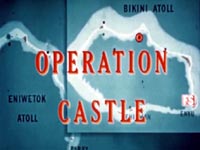
Operation Castle CR NEW
|
 Date:: 1954 | Film ID:: 0800013 | Runtime:: 21:01
Castle was a 6-shot test series conducted at the Pacific Proving Ground in the Marshall Islands in 1954. Castle represented the end of a drive for a smaller more efficient deployable thermonuclear weapons. The first test Bravo was the Americas largest yield atmospheric test causing a serious radiological accident. The film shows weapon assembly, deployment, transport and camera setup. The film focuses on the radiological accident, and footage of the tests themselves. This is LLNL version of this film, with with audio and video quality far superior to the DOE VHS release. DOE version available here.
|
|
Operation Castle ME
|
 Date:: 1954 | Film ID:: N/A | Runtime:: 38:54
Castle was the 9th US test series, conducted by Joint Task Force Seven at Bikini Atoll in March 1954. A joint venture between the AEC and the DoD, the ultimate objective of the operation was to test designs for an aircraft-deliverable thermonuclear weapon. The first shot Bravo was accidentally the largest ever test, the yield was 2.5x greater than expected due to the lithium isotope used which produced extra tritium, which greatly increased the yield. The Echo test was canceled due to the liquid fuel design becoming obsolete with the success of dry-fueled Bravo.
|
|
Operation Teapot ME
|
 Date:: 1955 | Film ID:: 0800017 | Runtime:: 30:53
Teapot was the fifth series of atmospheric nuclear weapons tests conducted by the A.E.C. within the continental U.S. The series consisted of 14 nuclear events and one non-nuclear detonation at the N.T.S. in 1955. It was was intended to test nuclear devices for possible inclusion in the stockpile. One test, Apple-2, involved a specially constructed 'Doom Town. This film is black and white, but has shifted to orange due to degredation of the film. The soundtrack has been significantly degraded as well.
Colourized version of 0800017
|
|
Operation Wigwam CR
|
 Date:: 1955 | Film ID:: 0800018 | Runtime:: 37:02
Operation Wigwam was a deep underwater nuclear test conducted in May 1955 in the Pacific Ocean 800km southwest of San Diego California, under the joint administration of the AEC and the DOD. The purpose of the operation was to determine the radiation and pressure phenomena associated with nuclear detonations at great depths, and to ascertain the effects such explosions would have on submerged and surface vessels. Approximately 6,544 personnel and 30 ships took part in this operation under the command of JTF7.
|
|
Operation Redwing
|
 Date:: 1956 | Film ID:: 0800019 | Runtime:: 27:01
The 17 shot Redwing series was held primarily to test high yield thermonuclear devices too large be tested in Nevada. The AEC progress in miniaturization of warheads had accelerated to where the equivalent of the 90 ton weight of the Mike device in Operation Ivy was now air deliverable by bomber. Over 10,000 military personnel and civilian employees of the AEC and the DOD participated in these nuclear tests. This film is black and white, but has a significant redshift due to the degradation of the film stock.
|
|
Operation Redwing ME
|
 Date:: 1956 | Film ID:: 0800020 | Runtime:: 30:53
This colour film details instrumentation, many of experiments and effects tests conducted during Operation Redwing. Complete weapon systems were exposed to blast effects, and a fallout computer was successfully used for the first time. The series included the Cherokee test, the first U.S. high-altitude test of a thermonuclear weapon. The Lacrosse and Cherokee tests were observed from the USS Mt. McKinley by 15 American press, radio and television reporters. These were the first uncleared US civilians in ten years to observe an US nuclear test in the Pacific.
|
|
WADC Operation Redwing
|
 Date:: 1956 | Film ID:: N/A | Runtime:: 17:10
Produced by the Lookout Mountain Laboratory 1352d Motion Picture Squadron, this film details the operation of the Wright Aeronautical Development Center (WADC) aircraft during Operation Redwing in 1956. The film culminates with footage of shot Navajo 10/07/1956.
|
|
Operation Plumbbob
|
 Date:: 1957 | Film ID:: 0800021 | Runtime:: 23:01
Operation Plumbbob was the largest and most controversial test series in the history of the NTS. It had the tallest tower tests to date, as well as high-altitude balloon tests. Approximately 18,000 members of the US Armed Forces participated in exercises Desert Rock VII and VIII to gain a better understanding the physical and psychological rigors of the tactical nuclear battlefield. The first underground test Rainier was also conducted which produced no fallout. The film includes many aspects of the instrumentation and operation objectives.The film is black and white but has an orange tint due to degradation of the film stock.
|
|
Project Plowshare
|
 Date:: 1957-1973 | Film ID:: N/A | Runtime:: 28:21
Project Plowshare was sponsored and conducted by LLNL. Plowshare was the overall term for the development of techniques to use nuclear explosives for peaceful purposes, A.K.A. Peaceful Nuclear Explosions (PNE). Proposed uses for included widening canals, constructing waterways and roads, and creating underground caverns for water, natural gas, and petroleum storage. Public concerns about the health effects and a lack of political support eventually led to abandonment of the concept. The Soviet Union had a similar program called Nuclear Explosions for the National Economy.
|
|
Operation Hardtack ME pt.1
|
 Date:: 1958 | Film ID:: 0800023 | Runtime:: 26:44
Hardtack I consisted of 35 nuclear tests conducted at the Pacific Proving Ground in 1958. These tests included balloon, surface, barge, underwater, and rocket-borne high-altitude tests. Hardtack I consisted of three portions; the first was the development of nuclear weapons. with AEC activities. The second portion, sponsored by DoD, consisted of the underwater tests Wahoo and Umbrella.This film is black and white, but has a red hue due to degradation of the film similar to that in film 0800019 Operation Redwing.
|
|
Operation Agus Report
|
 Date:: 1958 | Film ID:: 0800027 | Runtime:: 45:39
Argus was a series of three high-altitude nuclear tests conducted by the AEC in the South Atlantic Ocean in 1958. The results of Operation Argus proved the validity of the Christofilos theory. This theory proposed that a radiation belt is created in the upper regions of the Earth's atmosphere by high-altitude detonations. The radiation belt affects radio and radar transmissions, damages or destroys the arming and fuzing mechanisms of ICBM warheads, and endangers crews of orbiting space vehicles that might enter the belt. The tests were conducted in complete secrecy and were not announced until the following year. 4,500 military personnel and civilian scientists participated in the test operation.
|
|
Project Gnome
|
 Date:: 1961 | Film ID:: 0800034 | Runtime:: 29:29
Project GNOME was a 45-test series conducted at the NTS, part of Operation Nougat. GNOME was the first nuclear test in the Plowshare Program. The Plowshare Program objectives were to determine how energy produced from nuclear explosions could be used for peaceful or civilian purposes. This film includes an introduction by Dr. Edward Teller, one of the few times he was captured on film.
|
|
Starfish Prime Report
|
 Date:: 1962 Film ID:: 0800062 Runtime: 07:09
Starfish Prime was one of the high-altitude nuclear tests in the Operation Fishbowl test series conducted in the Pacific Proving Ground in 1962. It was launched in the Johnston Island area to an altitude of about 400 kilometers by a Thor rocket and had a yield of 1.4 megatons. The test evaluated the capabilities of an anti-ballistic missile to operate in a nuclear environment and the vulnerability of a U.S. reentry vehicle to a nearby nuclear blast. This film demonstrates the amazing restoration work done by Atomcentral on the original film negative, especially when compared directly with the original released on VHS by the Department of Energy.
|
|
Operation Dominic JTF8
|
 Date:: 1962 | Film ID:: 0800065 | Runtime:: 19:31
The Johnston Island area segment of Operation Dominic I in 1962 was divided into two parts: the Fishbowl high-altitude tests and open sea airdrop tests. Much of the film was devoted to the failures that occurred in the high-altitude program. To improve the acquisition of test data, the Thor rockets also carried and deployed three scientific test pods. These reentry pods contained diagnostic equipment deployed shortly after the weapon was detonated. The film details the ground based and aerial instrumentation, observation and support aircraft, experimentation, and the complexities of an operation that encompassed millions of square kilometers.
|
|
Ivy Flats Film Report 1962 NEW
|
 Date: 1962 | Film ID: 0800032 | Runtime: 19:01
This film details operations conducted at the NTS during 1962. Specifically the 'Little Feller I' test shot, the final phase of Operation Sunbeam (a.k.a. Dominic II). The test involved the detonation of a live nuclear round fired from the Davy Crockett artillery piece. The video shows the exercise observed by dignitaries, including U.S. Attorney General Robert Kennedy and General Maxwell Taylor, a presidential military adviser. Article on the Davy Crockett weapon system. Beautifully restored by Atom Central.
|
|
Project Sedan - Storax
|
 Date:: 1962-3 | Film ID:: 0800030 | Runtime:: 07:14
The 104Kt Sedan test was conducted under the auspices of the Plowshare program, an attempt to develop non-military uses for nuclear explosives. The purpose of Sedan was to investigate the potential of 'clean' thermonuclear devices for producing large craters cheaply (for canal or harbor construction for example). Twelve million tons of soil and rock were lifted into the air, eight million tons of it falling outside the crater. The final crater was 390m wide and 97m deep. The program was abandoned due to unworkable residual radiation levels. No nuclear excavation has since been undertaken by the United State since.
|
|
Pacific Nuclear Tests
|
 Date:: 1962 | Film ID:: 0800043 | Runtime:: 21:10
The first part of this film shows test Frigate Bird, part of the Operation Dominic/Nougat test series, conducted approximately 845km from Christmas Island. The submerged submarine Ethan Allen carrying 16 Polaris missiles, launched the missile with the warhead detonating on target.
The second part shows an antisubmarine rocket (ASROC) underwater nuclear weapons-effects test. It was configured as a nuclear depth charge for the Swordfish test. Launched from the destroyer Agerholm, its target a raft circled by diagnostic devices. The explosion created a 1.6km radius radioactive base surge that engulfed some target ships. Once the initial base surge subsided, a second plume was seen created by detonation bubble surfacing. Preparations, placement of diagnostic devices, safety precautions are shown.
|
|
Nuclear Effects at Sea - New
|
 Date: 1976 | Film ID: 0800048 | Runtime 19:58
Video detailing the effects of high-altitude nuclear tests on ships, satellites, and personnel. Effects such as electromagnetic pulse (EMP), blast, flash blindness, retinal damage as well as thermal and nuclear radiation. Direct shock damage to a ship’s hull and secondary damage to interior components is shown from non-nuclear test Charlie of Operation Sailor Hat 1965. Surge damage is shown from Wahoo Hardtack I 1958.
|
|
Trinity through Buster
|
|
|
Date:: 1945-51 | Film ID:: 0800089 | Runtime:: 22:51
This film describes the U.S. atomic tests conducted from 1945 through 1951 (Trinity through Operation Buster-Jangle). The film details the progression of weapon development, their miniaturization and the first use of thermonuclear devices. These tests were conducted at the Pacific Proving Ground and the Nevada Test Site/Nevada Proving Ground, later permanently renamed the Nevada Test Site.
|
|
SAC Delivery Missions
|
 Date:: 1960 | Film ID:: 0800092 | Runtime:: 33:42
Training film about the Strategic Air Command, some nuclear history regarding SAC and some interesting shots. Intercontinental Ballistic Missiles (ICBM) made long range bombers carrying nuclear weapons obsolete. Produced by Lookout Mountain Labs for the Air Force. This film is a transfer from a 16mm Internegative to digital, plus some digital clean up and color correction by Atomcentral.
|
|
USAF in Operation Dominic
|
 : 1962 | Film ID:: N/A | Runtime:: 30:33
Documentary on the role of United States Air Force during the Operation Dominic nuclear tests in the Pacific in 1962. Produced under the supervision of the USAF in collaboration with Joint Task Force 8. It was released in 1965 and declassified in 2014 by the National Archives and Records Administration. The film begins with the delivery of a MK-41 bomb by a B-52, before detailing the airborne array of instrumentation and testing aircraft during shot Adobe on the 25th of April 1962. It details of the airborne sampling of the clouds, and chorioretinal blindness experiments on test animals.
|
|
Operation Dominic Highlights
|
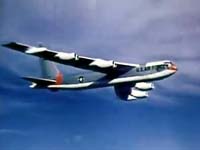 Date:: 1962 | Film ID:: N/A | Runtime:: 25:26
Documentary summarizing the participation of Joint Task Force 8 and the various technical support agencies in Operation Dominic. The Sandia Corporation was responsible for the fuzing and arming functions, ad EGnG directed the timing and firing functions. The film features the loading, delivery and detonation of a Mark 36 thermonuclear bomb.
|
|
Nuclear Weapons FX Pt.III
|
 Date:: Unknown | Film ID:: N/A | Runtime:: 36:16
Training film produced for the USAF for Lookout Mountain detailing the effects of a ground burst nuclear weapons. Shots Sugar of Operation Buster-Jangle and Ess of Operation Teapot are shown.
|
|
Nuclear Weapons Effects Pt.IV
|
 Date:: Unknown | Film ID:: N/A | Runtime:: 32:44
Effects of nuclear weapons under water.
|
|
The Sandia Story
|
 Date:: 1945 | Film ID:: N/A | Runtime:: 33:11
Sandia traces its origins to WWII and the Manhattan Project. Beginning as Z Division in July 1945, a unit established within Los Alamos to handle the engineering and assembly of nuclear weapon designs. During the Cold War, Sandia was the primary weapons engineering laboratory for Los Alamos and Lawrence Livermore. Responsible for designing nuclear weapons for the military, and ensuring the reliability of the US stockpile. Sandia has evolved into a 'multidisciplinary national security laboratory'. Sandia has been owned by the US federal government since 1949, but privately managed by a subsidiary of Honeywell International. This technicolour film was produced in 1945 by Lookout Mountain Laboratory in Hollywood. This copy beautifully restored by Atom Central.
|
|
Project Rulison
|
 Date:: 1969 | Film ID:: 0800036 | Runtime:: 07:48
Project Rulison was a gas stimulation nuclear test under the auspices of the Plowshare program which promoted the use of nuclear explosions for peaceful purposes. The 40-kiloton test was detonated 10km west of Grand Valley Colorado 10/09/1969. Its purpose was to release natural gas reserves locked in the sandstone and shale of the Mesa Verde formation. The film shows the explosion, underground rock fracturing, gas release, and underground well operations in schematic animation. The actual nuclear explosive package is also shown.
|
|
|
|
|